

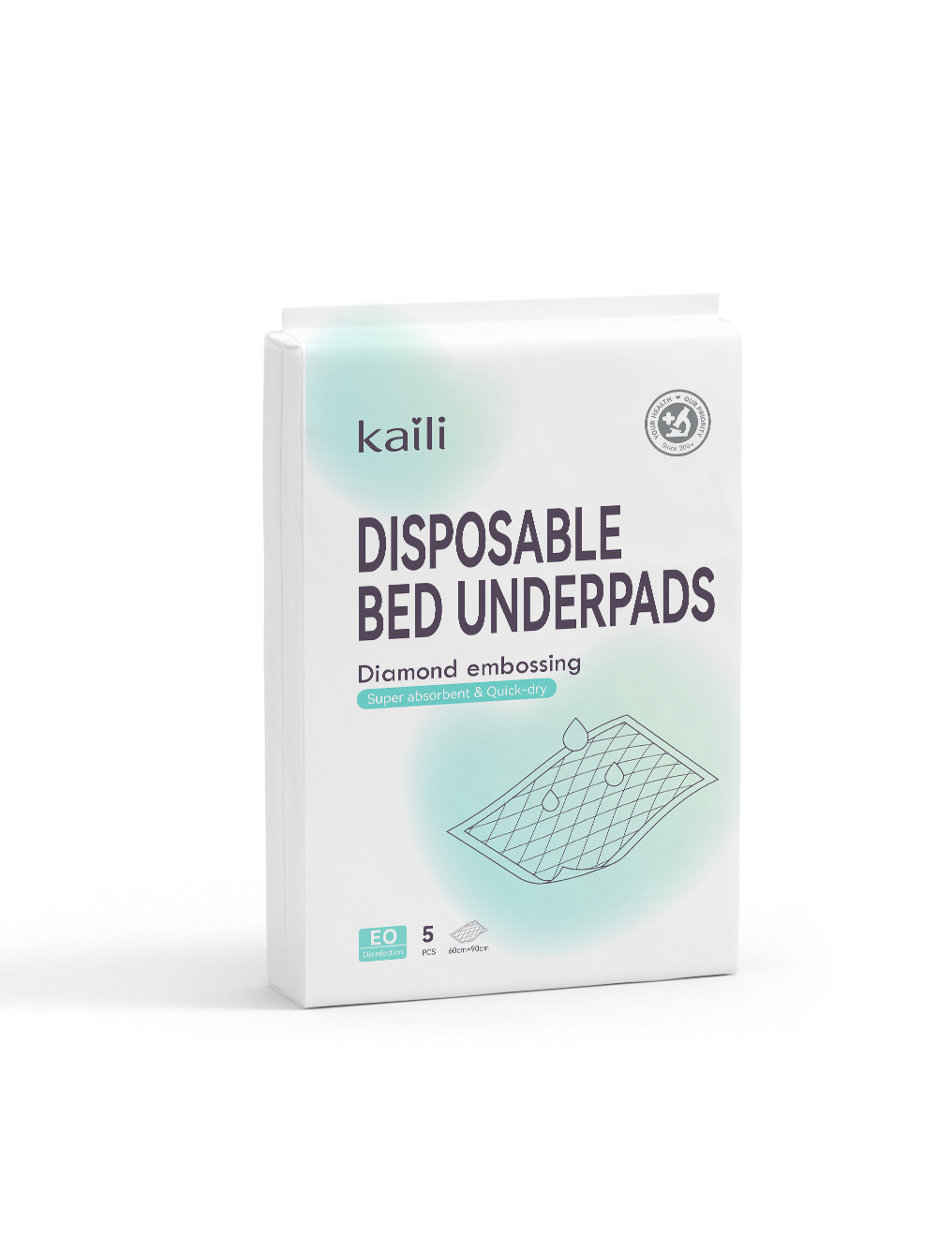
Walk into any hospital ward, and you will find the same thin, rectangular pad tucked beneath patients in beds, on examination tables, and in recovery rooms. The disposable underpad — also called a bed pad, chux, or incontinence sheet — is one of the most quietly essential items in clinical care. Hospitals choose them over washable linen for reasons that go far beyond convenience: hygiene, infection control, cost per patient, and staff efficiency.
This article explains why hospitals use disposable underpads, how the numbers work out in their favor, and what that means for the buyers and distributors who supply them.
What Is a Disposable Underpad?
A disposable underpad is a flat, absorbent sheet placed under a patient to protect bedding and surfaces from urine, blood, and other fluids. Its structure is what makes it perform:
- Non-woven topsheet — soft, skin-friendly, and quick to pass liquid through
- Fluff pulp core — draws fluid in and spreads it across the pad
- Super absorbent polymer (SAP) — locks liquid in as a gel so it cannot leak back
- PE backsheet — a waterproof film that protects the mattress underneath
This four-layer construction is the same reason underpads outperform a simple towel or folded sheet. For a deeper technical look at how the core materials compare, see our breakdown of SAP vs. fluff pulp underpad cores.

The Hygiene Case: Infection Control and Patient Safety
The strongest argument for disposables is hygiene. In a hospital, a reusable pad must be laundered, and laundering is where contamination risk lives.
- Single-use eliminates cross-contamination. A disposable pad is used once and discarded, so pathogens from one patient cannot be transferred to the next.
- Barrier protection. The waterproof PE backsheet keeps body fluids from reaching the mattress, reducing the surface area that needs disinfecting between patients.
- Consistent absorbency. A fresh pad always performs at full capacity, where a washed reusable pad loses absorbency with every wash cycle.
For infection-control teams, this is the deciding factor. The clinical literature consistently points to single-use protective equipment as a key line of defense against healthcare-associated infections (HAIs), and underpads sit squarely in that category.
The Cost Case: Disposable vs. Reusable — The Real Math
On paper, a reusable pad looks cheaper because it is bought once and reused. In practice, the full cost of ownership tells a different story. A hospital pays for a reusable pad through laundry, water, energy, detergent, labor, handling, and the pads that are lost or discarded early — all of which sit on top of the purchase price.
| Cost driver | Reusable underpad | Disposable underpad |
|---|---|---|
| Upfront cost | Higher per unit | Lower per unit |
| Laundry & utilities | Recurring, per wash | None |
| Handling & labor | Sorting, washing, folding | Minimal (single-use) |
| Infection risk | Washed-in risk | Eliminated by single-use |
| Lifespan & replacement | Wears out, needs replacing | One use, always new |
| Predictable budgeting | Variable | Predictable per-patient cost |
For hospital purchasing managers, the disposable route turns a variable, labor-heavy cost into a predictable per-patient line item — which is exactly what makes budgeting easier.
Why Hospitals Buy Underpads in Bulk
Because underpads are single-use and consumed constantly, hospitals buy them in bulk, on a recurring basis. This is the dynamic that makes the hospital channel so attractive to distributors and manufacturers alike:
- High, steady consumption. A single occupied bed can use multiple underpads per day, every day of the year.
- Repeat purchasing. Unlike a capital purchase, underpads are reordered continuously — creating a recurring revenue stream for suppliers.
- Standardized specifications. Hospitals order standard sizes like 60×90 cm, 60×60 cm, and 45×33 cm in set weights, which keeps production and pricing predictable for the factory.
For a manufacturer, this is why hospital and nursing-home supply is often described as the most stable distribution market for underpads. A buyer choosing the right size and absorbency for their facility can consult our adult underpad size and absorption chart.
What Hospitals Look for in an Underpad Supplier
Hospitals do not buy on price alone. Their procurement teams evaluate suppliers against a checklist that a serious manufacturer must clear:
- Certifications — ISO 9001 (quality management) and ISO 13485 (medical devices), plus CE marking for the relevant markets.
- Clinical-grade hygiene — GMP cleanroom production and EO sterilization where required, backed by an in-house microbiology lab.
- Consistent quality — the same absorbency, size, and leak protection across every order and every production run.
- Reliable supply — the ability to hold stock and ship on a dependable schedule, because a ward cannot wait weeks for its consumables.
- Documentation — correct HS code, certificates, and test reports to satisfy hospital compliance teams.
We have broken down each of these credentials in detail in our guide to underpad certifications explained, so you know exactly which marks to verify before committing to a supplier.
Conclusion
Hospitals use disposable underpads because, measured over the full cost of ownership, they win on hygiene, infection control, and predictable per-patient cost. Single-use eliminates the cross-contamination and labor burden of laundering, while bulk, recurring demand makes the hospital channel one of the most stable markets in the hygiene industry.
That stability is exactly what makes underpads an attractive product for distributors and private-label brands. At Chinaunderpad, we manufacture disposable underpads for hospital groups, nursing homes, and distributors worldwide — with ISO 9001 and ISO 13485 certification, GMP cleanroom production, and 20 years of experience supplying 2,000+ maternity hospitals.
Ready to supply the hospital and care-home market? Request a quote with your target sizes, weights, and volumes, or contact us to discuss OEM and private-label options — our team replies within 24 hours with specifications, certification documents, and free samples.

