

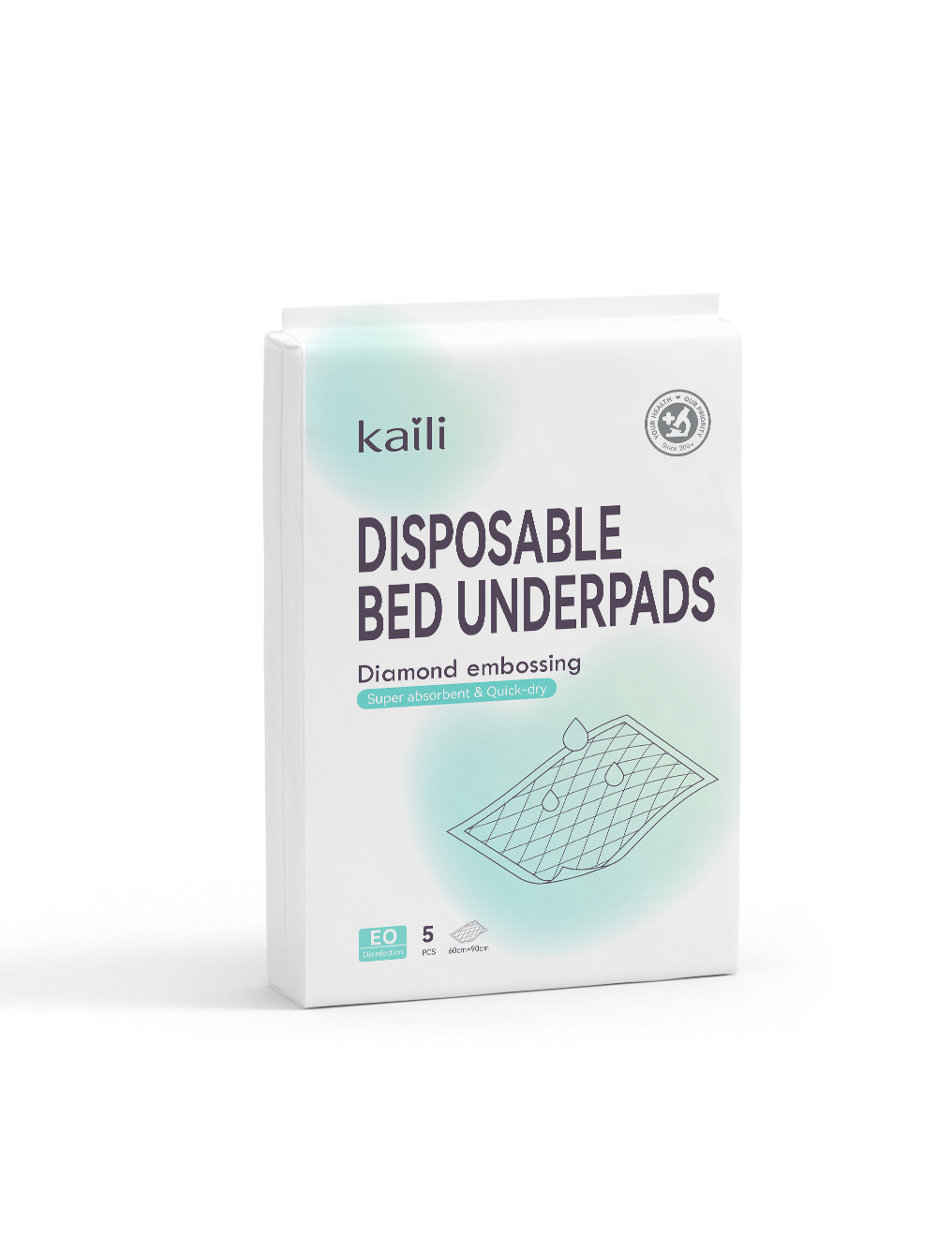
Caring for someone who cannot leave the bed means managing incontinence safely, hygienically, and with as little discomfort as possible for the person being cared for. The adult underpad — also called a bed pad, chux, or incontinence sheet — is the first line of defense. Used correctly, it protects the mattress, keeps skin dry, and cuts down the number of full bed changes a caregiver has to make each day.
This step-by-step guide explains how to use adult underpads for bedridden patients, from choosing the right size to placing, changing, and disposing of them properly. It is written for family caregivers and professional care staff alike.
What Is an Adult Underpad?
An adult underpad is a flat, absorbent sheet placed beneath a patient to catch urine, sweat, wound drainage, and other fluids before they reach the bedding. Its layered construction does the heavy lifting:
- Non-woven topsheet — soft against the skin and fast to pass liquid through
- Fluff pulp core — draws fluid in and spreads it evenly across the pad
- Super absorbent polymer (SAP) — turns liquid into a gel so it stays locked away
- Waterproof PE backsheet — the barrier that protects the mattress underneath
For a technical look at how the core materials compare, see our guide to SAP vs. fluff pulp underpad cores.

Step 1: Choose the Right Size and Absorbency
Using the correct size is the single biggest factor in whether an underpad works. A pad that is too small will be outflanked by movement; one that is too large is awkward to position and wastes material.
- 60 × 90 cm — the standard full-size choice for adult beds and high-volume night use
- 60 × 60 cm — a good middle size for wheelchair use, chairs, and spot protection
- 45 × 33 cm — for small coverage areas or as a second pad under a heavier patient
Match the absorbency (gsm) to the volume of output. A bedridden patient with heavier or overnight incontinence needs a higher-gram pad, while a lighter daytime pad will do for spot protection. See the full adult underpad size and absorption chart for a side-by-side breakdown.
Step 2: Position the Underpad Correctly
Placement matters as much as size. Follow this routine for a secure, wrinkle-free fit:
- Roll the patient gently onto their side, keeping one hand on the shoulder and one on the hip for control.
- Lay the pad across the sheet with the waterproof (plastic) side facing down and the soft topsheet facing up.
- Center it under the hips and lower back — the area where most moisture collects.
- Smooth out all wrinkles and creases, which can cause pressure points and skin irritation.
- Tuck the pad’s edges lightly under the mattress where possible to stop it shifting during movement.
- Roll the patient back gently and re-check that the pad is centered and flat.
Tip: For heavier incontinence, layer two pads — one full-size beneath, one smaller across the hips — so a soiled top pad can be removed quickly without a full bed change.
Step 3: Change the Underpad Promptly
A wet underpad left in place is the main cause of moisture-associated skin damage and pressure injuries. Change the pad as soon as it is soiled, and always during scheduled checks.
- Check at regular intervals — at minimum every two to three hours, and more often for heavy output.
- Change immediately after each episode — do not wait until the pad is saturated.
- Clean and dry the skin thoroughly before laying a fresh pad, and apply a barrier cream to protect the skin.
- Dispose of the used pad in a sealed bag and follow local waste guidelines for clinical or household disposal.
Step 4: Protect the Skin, Not Just the Sheets
An underpad protects the bed, but the real goal is protecting the person. Combine the underpad with good skin-care habits:
- Keep the skin clean and dry — moisture is the enemy, not the incontinence itself.
- Reposition the patient regularly (typically every two hours) to relieve pressure.
- Use skin-friendly pads with a soft non-woven topsheet to reduce friction and chafing.
- Watch for redness or breakdown and escalate to a clinician at the first sign of a pressure injury.
Hospitals and care homes follow this same discipline at scale, which is why they standardize on disposable underpads. For the clinical rationale, see why hospitals use disposable underpads.
Common Mistakes to Avoid
- Wrong side up — the waterproof layer must face down; reversing it traps moisture against the skin.
- Using a pad that is too small — undersized pads leak around the edges and force extra bed changes.
- Leaving a soiled pad in place — the fastest route to skin breakdown and odor.
- Reusing a disposable pad — disposables are single-use; reusing them defeats the hygiene benefit.
Conclusion
An adult underpad works only as well as it is used. Choose the right size and absorbency, place it with the waterproof side down and the edges smooth, change it the moment it is soiled, and pair it with consistent skin care. Done correctly, a simple underpad protects both the mattress and the person — and saves the caregiver hours of extra laundry and full bed changes every week.
At Chinaunderpad, we manufacture disposable adult underpads for hospitals, care homes, and distributors worldwide — with ISO 9001 and ISO 13485 certification, GMP cleanroom production, and 20 years of experience supplying 2,000+ maternity and care facilities.
Looking for a reliable adult underpad supplier? Request a quote with your target sizes, weights, and volumes, or contact us to discuss OEM and private-label options — we reply within 24 hours with specifications, certifications, and free samples.

