
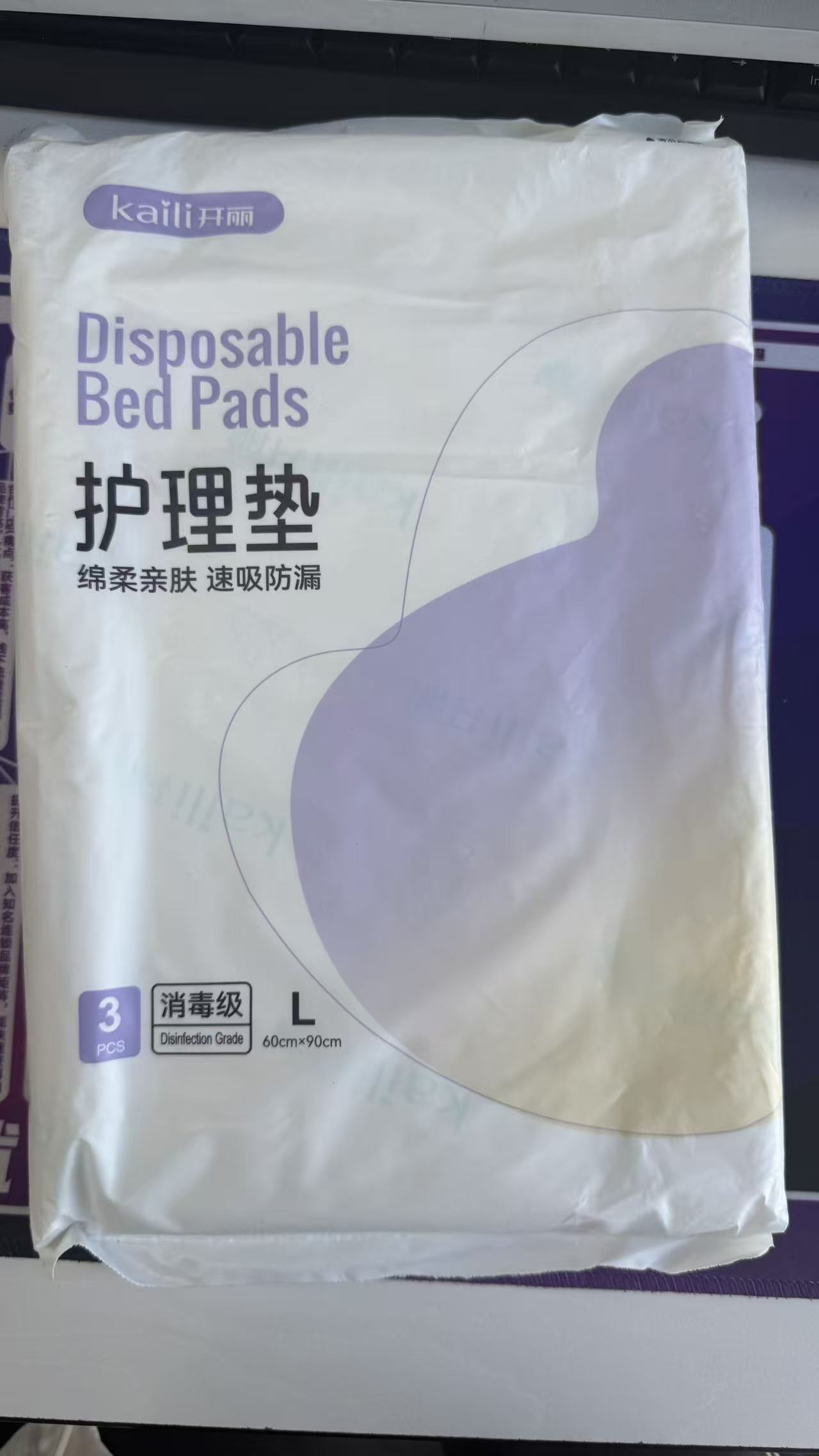
Every disposable underpad you have ever stocked — whether for a hospital, a nursing home, or a retail brand — starts from the same raw materials and travels through a surprisingly consistent underpad manufacturing process. Knowing how these pads are made matters for any B2B buyer. It explains why two pads that look alike can perform differently, what drives cost and lead time, and which quality controls to ask a supplier about before you place an order. Here is a step-by-step look at how a disposable underpad goes from raw material to finished, packed product.
The Five Layers of a Disposable Underpad
Before the machines start, it helps to understand what is being assembled. A standard disposable underpad is a laminate of five functional layers:
- Nonwoven top sheet — the soft, skin-contact layer that lets liquid pass through quickly and keeps the surface feeling dry.
- Acquisition layer (optional) — a fast-spreading layer that distributes liquid evenly across the core, preventing pooling in one spot.
- Absorbent core — a blend of fluff pulp and super absorbent polymer (SAP) that locks in liquid and converts it to gel.
- Tissue wrap — a thin carrier that holds the fluff pulp and SAP in place so the core does not shift or clump.
- PE backsheet — the waterproof plastic film that keeps the liquid from leaking onto the bed or chair.
The exact combination of these layers — and the ratio of fluff pulp to SAP — is what separates a premium pad from a cheap one. For a closer technical comparison of core construction, see our guide to SAP vs fluff pulp underpad cores.
Step-by-Step Underpad Manufacturing Process
The production line is a continuous, largely automated process. Here is how it runs:
1. Raw Material Preparation
Fluff pulp arrives as large rolls or bales, SAP as a fine powder, and the nonwoven and PE film as master rolls. Materials are staged, weighed, and released to the line only after passing incoming inspection. Many factories keep controlled temperature and humidity because fluff pulp absorbs moisture from the air, which changes how it processes.
2. Core Forming
The fluff pulp is defiberized — ground back into loose fibers — and air-laid together with SAP onto a forming surface to create the absorbent core. The SAP-to-pulp ratio is precisely metered here, which is the single biggest lever on absorbency and cost.
3. Lamination and Sealing
The core is sandwiched between the nonwoven top sheet and the PE backsheet, then heat-sealed and embossed around the edges and across the surface. The embossing pattern does two jobs: it bonds the layers together and channels liquid toward the core.
4. Cutting and Folding
The continuous web is cut to size — 60×90 cm, 60×60 cm, 45×33 cm, and other sizes — then folded and stacked. Automated counters ensure each pack contains the correct number of pads.
5. Packaging
Pads are bagged or boxed, labeled, and case-packed for export. This is also where private-label branding, barcodes, and carton marks are applied for OEM orders. For more on branding, see how to customize underpad packaging.
6. Quality Control and Sterilization
Samples are pulled at every stage for weight, absorbency, and seal-integrity checks. For medical and hospital-grade products, the finished pads may also pass through EO (ethylene oxide) sterilization. Our factory runs ISO 9001 and ISO 13485 certified lines with an in-house microbiology lab — see our certifications explained.
What Actually Determines Quality
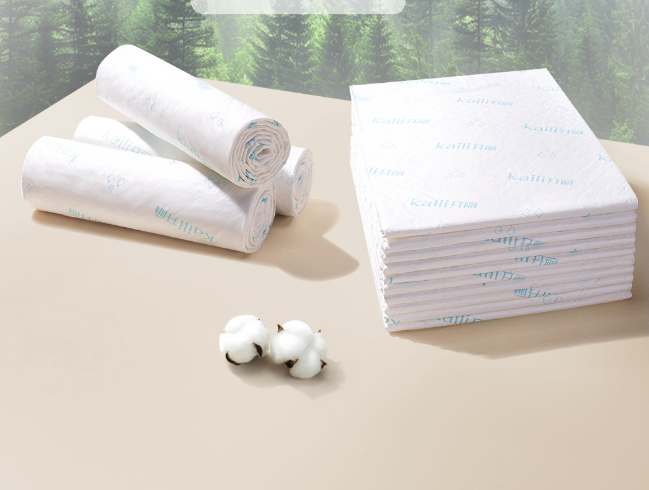
Two pads can look identical on a shelf and perform very differently in use. The differences trace back to the manufacturing process:
| Quality driver | What it affects | What to ask a supplier |
|---|---|---|
| SAP-to-pulp ratio | Absorbency and cost | “What is the SAP percentage in the core?” |
| Top-sheet material | Dryness and skin comfort | “Is the top sheet hydrophilic nonwoven?” |
| Embossing pattern | Leak prevention and core integrity | “Do you use heat-embossed lamination?” |
| GSM and size | Capacity and usage | “Can you match a specific GSM and size?” |
| Sterilization | Medical-grade compliance | “Do you offer EO sterilization for hospital use?” |
Asking these five questions before you order will quickly separate a real manufacturer from a trading company that cannot answer them.
Why Understanding the Process Matters for Buyers
For an importer or private-label brand, the manufacturing process is not an academic detail — it is a sourcing advantage. It lets you compare suppliers on factors that show up on the invoice but not on the product photo, negotiate on the right variables, and specify a product your market will actually pay for. It also shortens your vetting process, because you already know which questions expose a weak supplier.
The Bottom Line
The underpad manufacturing process is a five-layer, six-step operation where the absorbent core — and the metered ratio of fluff pulp to SAP — is the heart of the product. Understanding it gives any B2B buyer the vocabulary to compare suppliers, specify the right product, and protect their margin. Whether you are stocking hospital pads or building a private-label line, the difference between a good pad and a great one is made on the factory floor.
We manufacture disposable underpads, maternity pads, and pet pads on ISO 9001 and ISO 13485 certified lines, with full OEM/ODM customization and 24-hour quoting. Learn more about our factory, or request a quote with your target size, GSM, and SAP ratio — we will confirm the right specification for your market and reply within 24 hours.

