

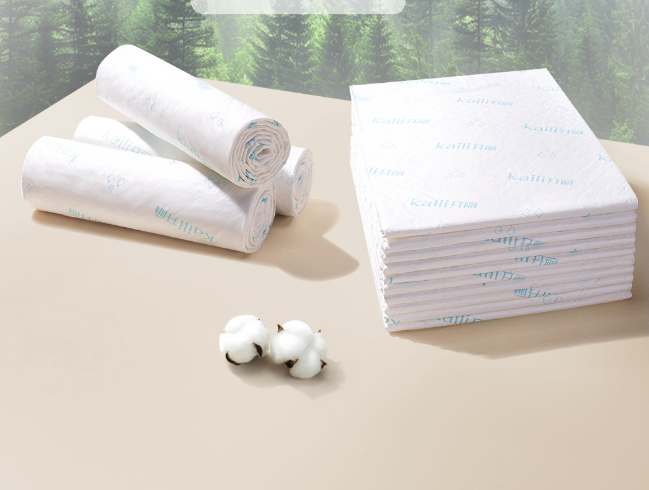
Every year, thousands of buyers — hospital purchasing managers, nursing-home administrators, Amazon sellers, and private-label brands — sit down to source disposable underpads, and most of them start with the same handful of questions: What size do I need? How much absorbency is enough? What does it actually cost, and how do I avoid a bad supplier?
This underpad buyer’s guide answers those questions in one place. Whether you are buying a few hundred pieces for a care home or container-loads for your own brand, the framework below will help you spec the right product, compare suppliers on the factors that matter, and land on a deal you can scale.
What Is a Disposable Underpad — and Why It Matters How It Is Built
Before you compare prices, you need to understand what you are buying. A disposable underpad (also called a bed pad, chux, or incontinence pad) is a flat, single-use absorbent sheet placed under a person or pet to protect bedding and surfaces from fluid. Its performance is almost entirely determined by four layers:
- Non-woven topsheet — the skin-facing layer; it must pass liquid through quickly and stay dry to the touch.
- Fluff pulp core — spreads fluid across the pad and adds bulk and comfort.
- Super absorbent polymer (SAP) — traps liquid as a gel so it cannot leak back out.
- PE film backsheet — a waterproof layer that protects the mattress or floor beneath.
The single biggest quality variable between suppliers is the balance of fluff pulp and SAP in the core. More SAP means more absorbency per gram but a thinner, firmer pad; more fluff pulp means a softer, bulkier pad. For a technical breakdown of how these two materials compare, read our guide to SAP vs. fluff pulp underpad cores.
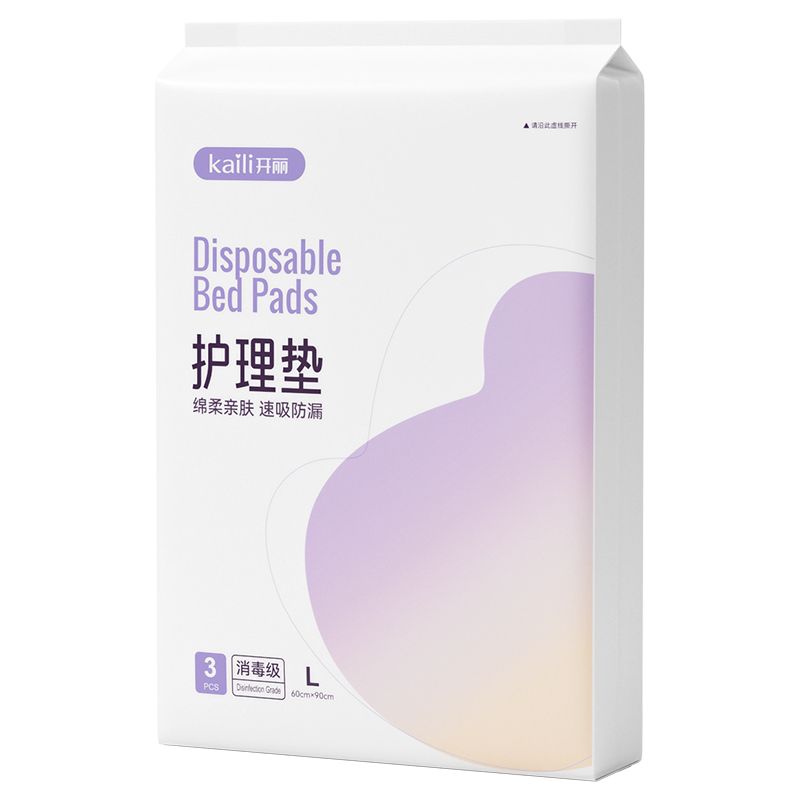
Step 1: Choose the Right Size and Weight
Underpads are sold by two dimensions: the physical size and the absorbency weight (measured in grams per square meter, or gsm). Getting these two right is the fastest way to avoid ordering pads that are either too flimsy or needlessly expensive.
Standard sizes
| Size | Typical use case |
|---|---|
| 60×90 cm | Hospital and nursing-home beds, full bed coverage |
| 60×60 cm | Bedside protection, chair and examination tables |
| 60×45 cm | Wheelchairs, smaller beds, and targeted protection |
| 45×33 cm | Baby changing, veterinary and grooming use |
Absorbency weights
| Weight | Best for |
|---|---|
| 40 gsm | Light protection, baby changing, short procedures |
| 60 gsm | Everyday adult incontinence and general care |
| 75 gsm | Heavy or overnight protection |
| 100 gsm | Bariatric and high-flow clinical use |
If you are unsure where your volume sits on either axis, our adult underpad size and absorption chart maps the most common buyer combinations and what they are used for.
Step 2: Define Your Product Specification
Once you know the size and weight, lock down the specification so that every supplier quotes against the same product. A clear spec is what separates buyers who get comparable quotes from buyers who get ten different products and cannot tell why the prices differ.
A complete underpad spec should state:
- Size and weight — e.g. 60×90 cm, 75 gsm.
- Topsheet type — non-woven, spunbond, or a film topsheet.
- Backsheet — PE film (standard) or breathable/cloth-like backsheet.
- SAP content — the grams of super absorbent polymer per pad.
- Fold and pack — folded flat, or folded and packed per piece; how many per bag.
- Color and print — plain white, blue, or printed (printed costs more).
- Packaging — bulk polybag, retail polybag, or box, plus any private-label branding.
For a deeper look at the packaging and branding options, see our guide on how to customize underpad packaging for your brand.
Step 3: Decide OEM vs. ODM — and What It Means for MOQ
The next fork in the road is whether you buy a supplier’s existing product or build your own.
- OEM (Original Equipment Manufacturing) — you provide the brand, logo, and packaging design; the factory makes the product to your spec. Higher minimum order quantity, full brand control.
- ODM (Original Design Manufacturing) — the factory’s own product, rebranded with your label. Lower MOQ, faster to market.
The choice directly affects your minimum order quantity. In the underpad market, a standard rule of thumb is that custom OEM production starts around 50,000 pieces for boxed products and 30,000 pieces for polybag products, while off-the-shelf products with existing packaging can be ordered in far smaller quantities. We explain the full trade-off in OEM vs. ODM underpad: which should you choose, and what realistic MOQ and lead time look like for B2B buyers.
Step 4: Verify Certifications and Quality Systems
The cheapest quote is worthless if the product cannot clear your market’s compliance requirements. Before you commit, ask any supplier for these documents and verify they are current:
- ISO 9001 — quality management system.
- ISO 13485 — the medical-device quality standard, essential for hospital and clinical buyers.
- CE marking — required to place the product on the EU market.
- GMP cleanroom production — evidence of controlled, hygienic manufacturing.
- Test reports — absorbency, leakage, and biocompatibility where relevant.
A serious manufacturer will send these without hesitation. For a plain-English explanation of each mark and what it actually covers, see our underpad certifications explained.
Step 5: Vet the Supplier Before You Pay
Certifications on paper are not the same as a reliable factory on the ground. When you are shortlisting manufacturers — especially overseas — run each one through a short vetting process:
- Check the factory exists — request a video walkthrough or a live factory tour.
- Request a sample — and test it against your spec, not against a competitor’s cheapest product.
- Verify the certifications — cross-check certificate numbers with the issuing body.
- Clarify lead time and capacity — confirm they can actually meet your volume on schedule.
- Lock the payment terms — understand deposit, balance, and trade assurance.
We have turned this into a downloadable, ten-point checklist in our guide on how to vet an underpad manufacturer in China.
Underpad Buyer’s Guide FAQ
What is the best underpad size for a hospital bed? For a standard hospital or nursing-home bed, 60×90 cm is the most common size, as it covers the full mattress area and handles overnight volume. 60×60 cm is a good secondary size for chairs and examination tables.
How much absorbency do I need? For everyday adult use, 60 gsm is the typical baseline; step up to 75 gsm for heavy or overnight protection and 100 gsm for bariatric or high-flow clinical use. Lighter 40 gsm is usually reserved for baby changing and short procedures.
Should I buy OEM or ODM underpads? Choose ODM if you want to launch quickly with a lower MOQ and a rebranded existing product. Choose OEM when you need your own spec, packaging, and full brand control — and can commit to the higher minimum order quantity.
How do I avoid a bad underpad supplier? Never buy on price alone. Request samples and test them against your spec, verify the certifications with the issuing body, confirm lead time and capacity, and agree on clear payment and trade-assurance terms before committing.
Conclusion: Get the Spec Right, Then Let the Factory Compete
The buyers who get underpads right follow the same sequence every time: nail the size and weight, lock a clear specification, decide OEM vs. ODM, verify the certifications, then vet the factory. Do that, and the quotes you receive will finally be comparable — and the product you receive will actually match the sample you approved.
If you would like a copy of our full underpad sourcing checklist — including a ready-to-send spec template and supplier comparison sheet — reach out and we will send it to you free. At Chinaunderpad, we manufacture disposable underpads for hospitals, care homes, distributors, and private-label brands worldwide, with ISO 9001 and ISO 13485 certification, GMP cleanroom production, and 20 years of experience supplying 2,000+ maternity hospitals.
Ready to spec your order? Request a quote with your target size, weight, and volume, or contact us to discuss OEM and private-label options — our team replies within 24 hours with specifications, certification documents, and free samples.

