

Why Training Pads Make Puppy Potty Training Easier
House-training a new puppy is one of the first — and most frustrating — challenges a new owner faces. Puppy potty training pads give you a predictable indoor spot to catch accidents before they happen, which is especially useful for apartment dwellers, people who can’t step outside every two hours, and puppies that are too young to hold their bladder. The American Kennel Club recommends keeping a new puppy on a consistent elimination schedule — and for indoor training, a reliable pad spot is the cornerstone of that routine.
For B2B buyers — pet retailers, distributors, and private-label brands — this same challenge is a sales driver. A customer who succeeds with your pads on day one becomes a repeat buyer for months. A pad that leaks or slides leaves them switching brands. So getting the product right is just as important as getting the method right.
This guide walks through a 7-day plan your customers can follow, then explains the product features that make a pad actually work.

The 7-Day Puppy Potty Training Plan
A structured, repeatable routine works better than reacting to accidents. Here is a day-by-day plan that sets a puppy up to succeed.
Days 1–2: Build the Routine
- Pick one pad spot. Choose a fixed indoor location away from food, water, and the crate. Keep it in the same place so the puppy builds a scent and place association.
- Introduce the pad on a schedule. Take the puppy to the pad after waking, after meals, after play, and before bedtime — roughly every 1–2 hours for a young puppy.
- Use a cue word. Say the same phrase (for example, “go potty”) the moment the puppy steps onto the pad, then reward success immediately with a treat and praise.
Days 3–4: Reinforce and Reduce Accidents
- Watch for pre-elimination signals. Circling, sniffing the floor, or wandering away mid-play mean it is time to guide the puppy to the pad.
- Never punish accidents. Clean the spot with an enzyme cleaner to remove the scent; punishing only teaches the puppy to hide when it needs to go.
- Reward every success. Consistency matters more than frequency here — every correct use gets a treat within seconds.
Days 5–6: Expand the Pad Area and Fade Treats
- Gradually move the pad toward the door if the goal is eventually outdoor training, moving it a short distance each day.
- Reduce treat frequency to intermittent rewards so the behavior doesn’t depend on food alone.
Day 7: Lock In the Habit
- Test longer stretches. Leave the puppy for slightly longer intervals and confirm it returns to the pad reliably.
- Repeat and consolidate. One clean week is a good sign, but keep the routine for another week or two before considering the puppy fully house-trained.
| Day Range | Focus | Key Action |
|---|---|---|
| Days 1–2 | Routine | Fixed pad spot + timed trips + cue word |
| Days 3–4 | Reinforcement | Read signals, reward success, clean accidents |
| Days 5–6 | Transition | Move pad toward door, fade treats |
| Day 7 | Habit | Longer intervals, consolidate the routine |
What Makes a Training Pad Actually Work
The method only succeeds if the pad holds up. Here are the product features that determine whether a customer sticks with your brand — or abandons it.
- Absorbency and leak protection. A pad needs a superabsorbent polymer (SAP) core plus fluff pulp to lock moisture in and stop it leaking onto the floor. A thin, cheap pad saturates quickly and drives customers away.
- Quick-dry topsheet. The top layer should pull liquid through fast so the puppy’s paws stay dry and it isn’t stepping in puddles. To understand how the core materials work together, see our guide to SAP vs fluff pulp: which pad core absorbs better.
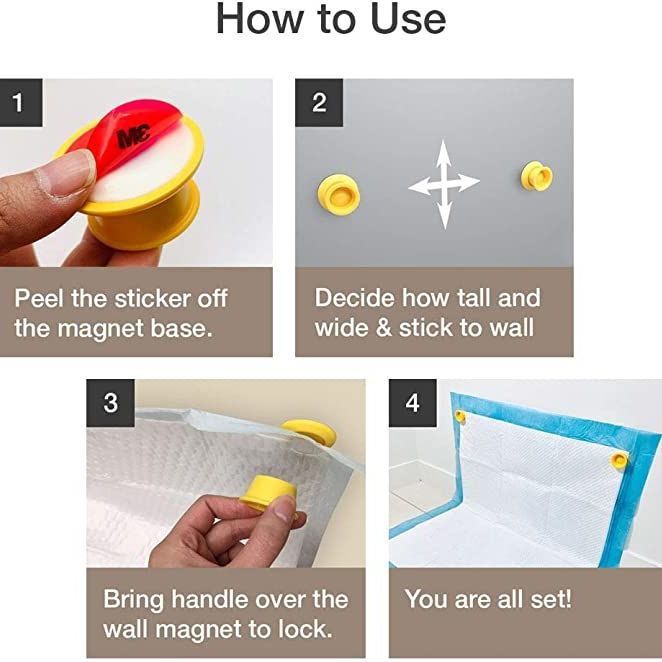
- Non-slip backing and corner adhesion. Puppies spin and scratch before going. A pad that slides bunches up and becomes useless. A grippy backsheet or adhesive tabs keep it flat.
- Built-in attractant. Many pads add a mild scent that draws puppies to the pad, which speeds up day-one success noticeably.
- Right sizing. A pad that is too small gets overshot. For most puppies, a pad large enough to stand on with room to spare is the safer choice.
For a closer look at the features and sizes we build into pet pads for cats and dogs, read our breakdown of pet pads for cats and dogs.
Common Potty Training Mistakes to Avoid
Most “failed” potty training is really a product-and-routine mismatch. Watch for these pitfalls:
- Moving the pad too often in the first week, which breaks the place association.
- Using a pad that leaks or slides, so the puppy loses confidence in the spot.
- Skipping the enzyme cleaner, which leaves a scent that pulls the puppy back to old accident spots.
- Rewarding too late, so the puppy can’t connect the action to the treat.
What to Look for When Sourcing Training Pads
If you are buying puppy potty training pads in bulk for resale or private label, the pads your customers use during this 7-day window are your brand’s first impression. The right puppy potty training pads turn a stressful first week into a repeat-purchase habit, so the product specs matter as much as the method. Prioritize a manufacturer that can provide:
- OEM/ODM customization of size, grammage, topsheet, and packaging so the pad matches your market.
- SAP-plus-fluff-pulp cores with documented absorbency, not a vague “super absorbent” claim.
- Non-slip backing and optional attractant as standard or add-on features.
- Certifications and quality control you can verify, plus free samples (you cover shipping) so you can test absorbency and leak protection before committing.
A manufacturer that already produces disposable hygiene products across adult, maternity, and pet lines brings the absorbency engineering your pet pads need. If sustainability is part of your brand positioning, see our guide to eco-friendly pet pads and what manufacturers offer in 2026.
Bottom Line
A 7-day plan with a fixed pad spot, a consistent schedule, and immediate rewards is the fastest, most humane way to house-train a puppy — but it only works on a pad that absorbs, stays put, and dries fast. For pet brands and distributors, that means the training pad you sell is doing the heavy lifting for your customer’s success, and for your repeat business.
Ready to source training pads that actually work? Contact our team to discuss sizes, materials, OEM/ODM options, and free samples — or request a quote and we will respond within 24 hours.

