
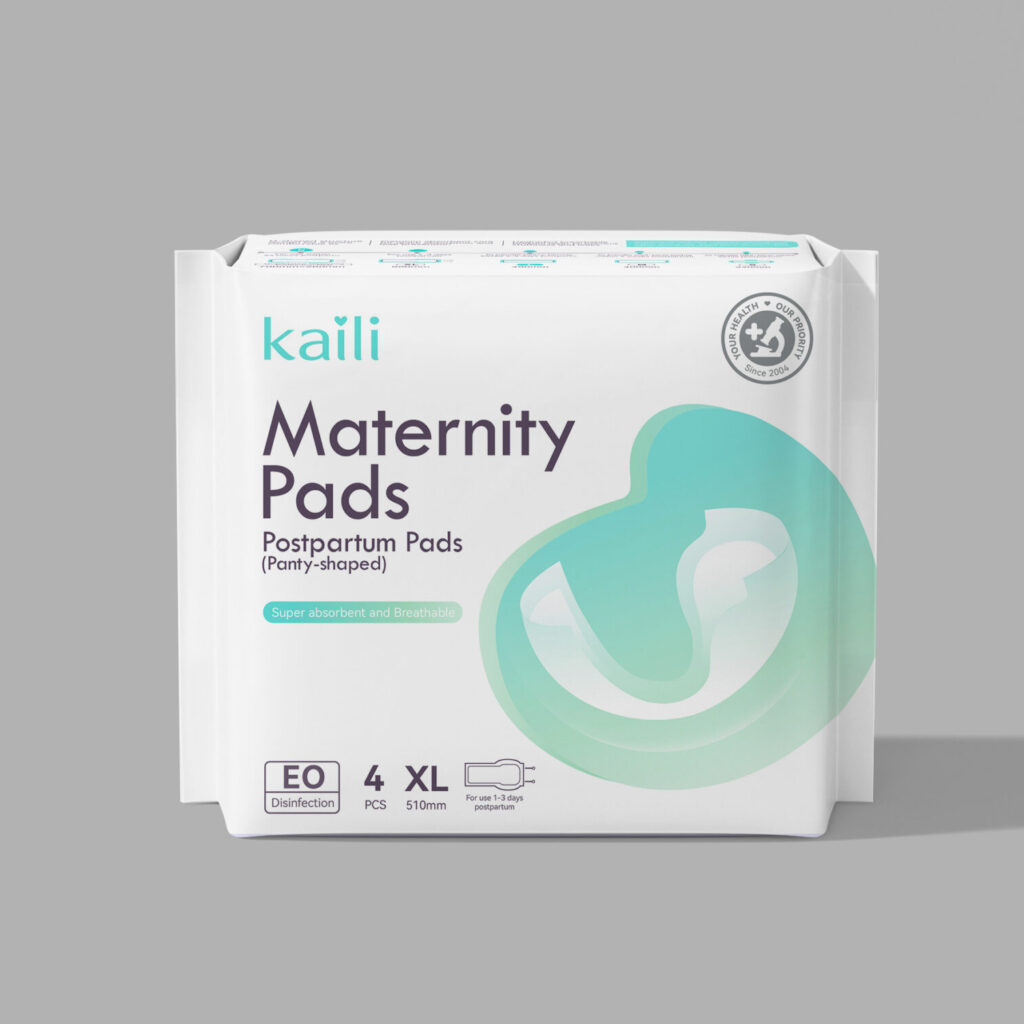
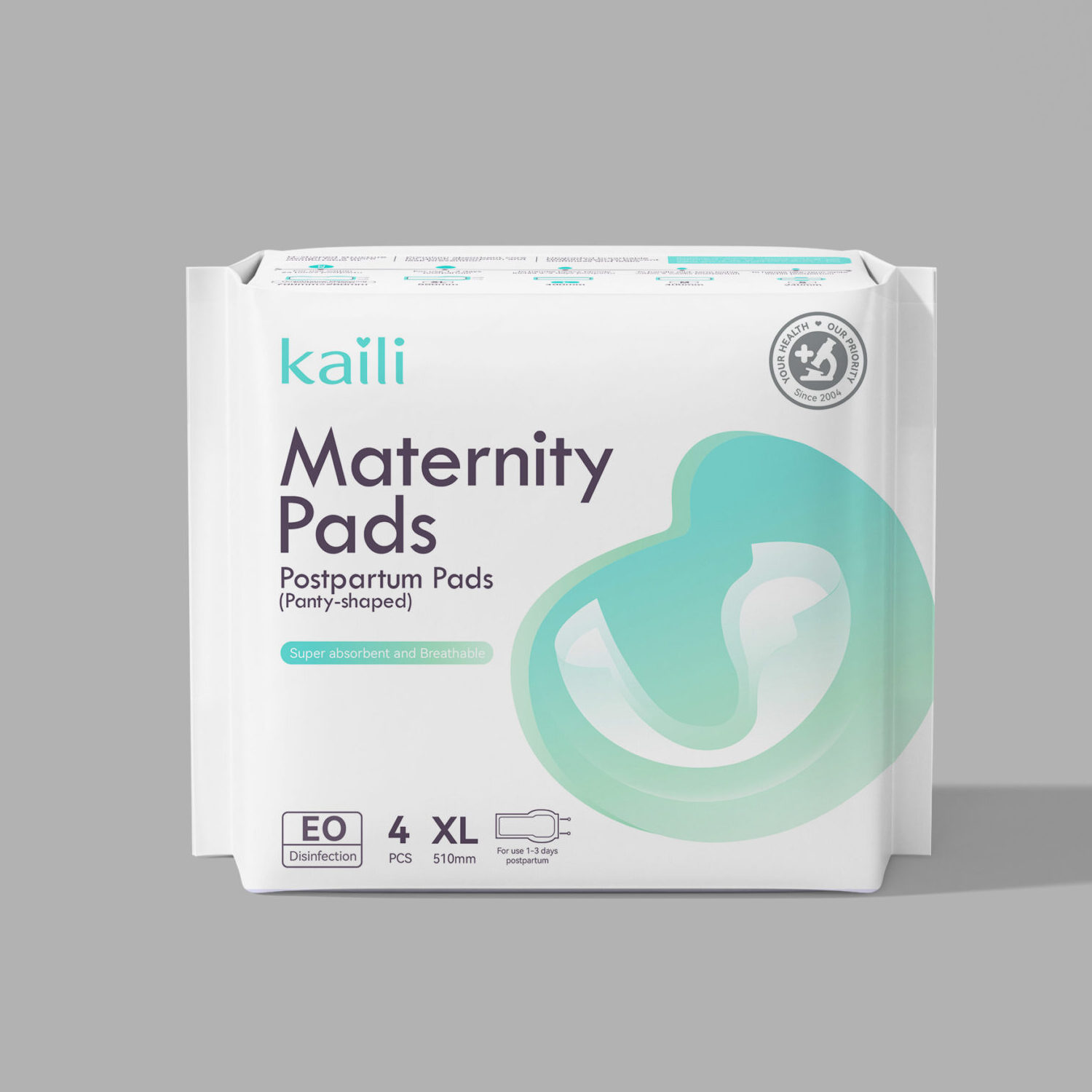
If you are building or expanding a maternal-care brand, choosing the right maternity pad manufacturer is the single decision that determines your margins, your lead times, and whether your product survives a retail or regulatory review. A maternity pad is not a commodity — it sits against healing, infection-prone skin in the most sensitive weeks of a woman’s life. The factory you pick has to deliver on absorbency, softness, sterilization, and consistency, batch after batch.
This checklist walks through the ten things to evaluate when vetting a maternity pad manufacturer for OEM or private-label production. Work through it before you sign a contract, and you will turn a high-stakes sourcing decision into a systematic one.
Why OEM Maternity Pads Need a Higher Bar
Maternity pads look simple, but they are held to a different standard than ordinary sanitary pads. After childbirth, the body sheds lochia for two to six weeks, and the heaviest flow in the first days outpaces even an overnight sanitary pad. The American College of Obstetricians and Gynecologists describes the postpartum weeks as a distinct recovery phase with its own hygiene needs — which is why dedicated postpartum protection exists as a separate product category. The pad must therefore be long, thick, soft, and often sterilized — and every one of those attributes has to be repeatable at scale.
That is what separates a real maternity pad manufacturer from a trading company that simply relabels stock. When you evaluate a factory, you are not just checking a product; you are checking whether its process can reproduce the same pad, with the same specification, every time. The ten points below are built around that idea.
1. Confirm They Actually Manufacture — Not Just Trade
The first filter is the simplest: is the supplier a factory or a middleman? A trading company buys from small workshops and adds a margin, which shows up in your price and in your loss of control.
- Ask for the business license and confirm the registered scope includes manufacturing.
- Request a live video call walking through the actual production lines.
- Ask which steps — if any — are outsourced, such as coating or EO sterilization.
- A genuine factory can explain its manufacturing process from raw fluff pulp and SAP to finished pad.
If you are still weighing OEM against ODM, our comparison of OEM vs ODM underpad manufacturing clarifies which model fits your brand.
2. Verify Certifications — and Check Them Independently
Hygiene products live or die on certification. A factory that claims ISO 13485 or CE must be able to prove it, and you should verify it yourself rather than take a certificate image at face value.
- Ask for certificate copies with numbers, then cross-check them against the issuing body’s public database.
- Confirm the certificate is issued to the factory’s registered name, not a trading company’s.
- Match the scope: ISO 13485 should cover medical disposables and hygiene products, not generic “manufacturing.”
- For the EU market, confirm the CE mark is backed by a Notified Body where required.
For a plain-language breakdown of what each certificate actually guarantees, see our guide to underpad certifications: CE, ISO 13485, ISO 9001, and GMP.
3. Inspect the Core Construction
The performance of a maternity pad is decided in its core, not its wrapper. Two pads can look identical and absorb very differently.
- Ask for the SAP-to-fluff-pulp ratio and the grams per square metre (gsm) of each layer.
- Confirm the top sheet is a soft non-woven material, and the back sheet is a leak-proof PE film.
- Request a material specification sheet covering every layer.
- Compare a cross-section sample against a known-good reference pad.
The absorbent core is the technical heart of the product. Our comparison of SAP vs fluff pulp underpad cores explains how that chemistry works and why it matters.
4. Check Sterilization and Hygiene Controls
For maternity pads, especially the ones used in the first days after delivery, sterilization is a genuine safety measure, not a luxury. The cervix is still dilated and the risk of infection is at its highest.
- Confirm whether pads are EO-sterilized and how residual levels are validated.
- Look for a GMP-grade cleanroom or equivalent production area.
- Ask about batch-level microbial testing, not just a one-time type-approval report.
- Check in-process hygiene: worker PPE, line cleanliness, and documented SOPs.
5. Review Sizes and the Full Product Range
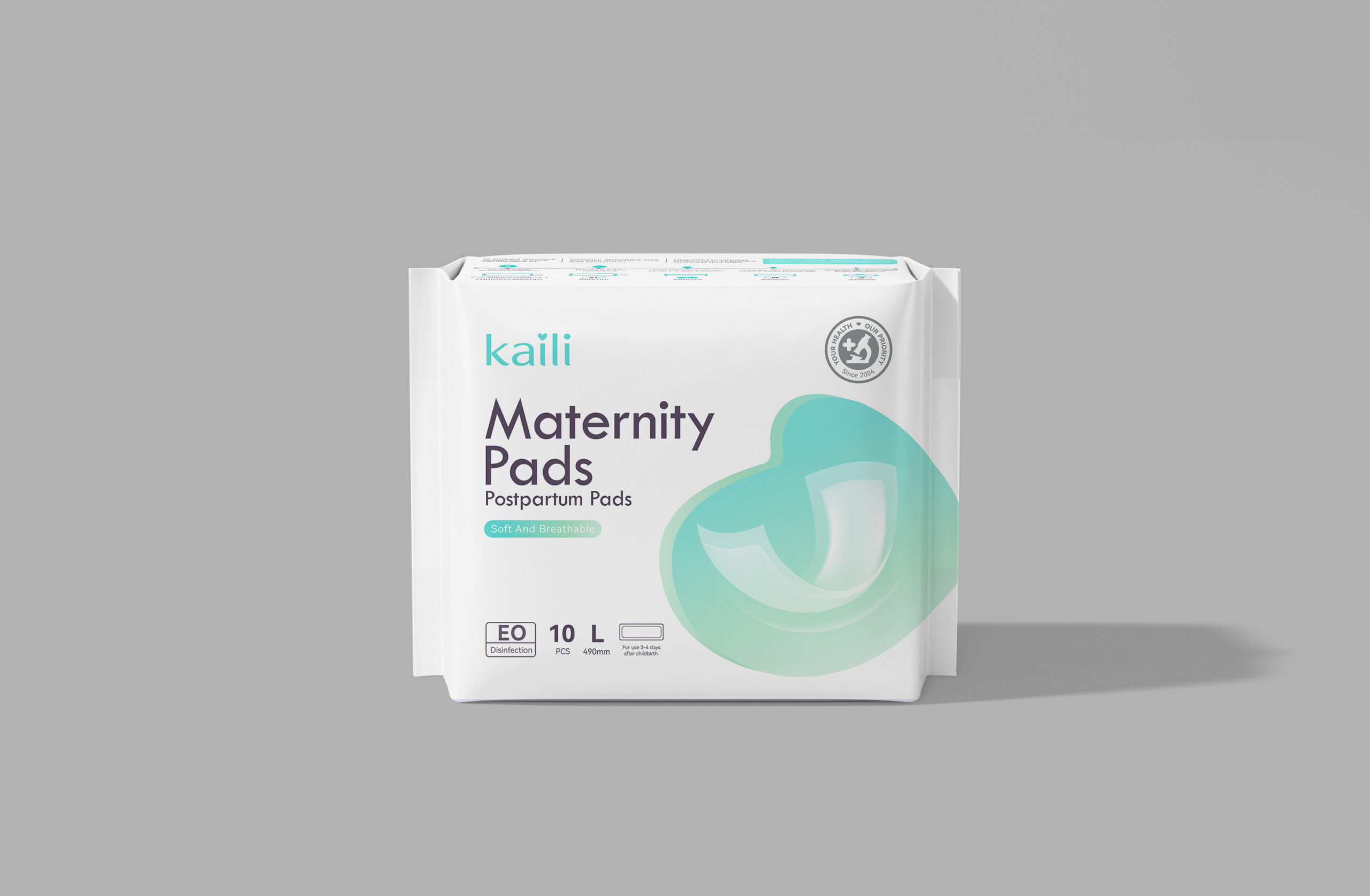
A maternity pad brand needs more than one size. Lochia is heaviest in the first days and lightens over weeks, so your catalogue should map to that journey — typically M, L, and XL.
| Size | Typical dimensions | Primary use |
|---|---|---|
| M | roughly 280 × 100 mm | Late postpartum, light flow |
| L | roughly 360 × 180 mm | Moderate flow, overnight |
| XL | roughly 420 × 210 mm | Heavy first days, extended wear |
Dimensions vary by manufacturer, so always confirm the exact millimetre measurements on the specification sheet. For a fuller breakdown of when to use each size, see our postpartum pad sizes guide.
6. Evaluate the OEM Customization Depth
Not every factory can do real OEM. Private label goes far beyond sticking your logo on a stock pad, so test how deep the customization runs.
- Sizing and shape — can they produce your exact dimensions, not just their standard range?
- Core specification — can they adjust gsm and SAP ratio to hit your absorbency target?
- Packaging — PE poly bag, paper carton, or retail hang-bag, with your branding.
- Multi-language regulatory text — barcodes, import labels, and market-specific compliance.
For a complete walkthrough of the packaging side, see how to customize underpad packaging for your brand.
7. Scrutinize MOQ, Lead Time, and Payment Terms
Price is only one variable. The minimum order quantity, lead time, and payment terms together determine your cash flow and your risk — so evaluate them as a package.
- Get a price breakdown per layer, not one lump sum, so you can see where the money goes.
- Confirm whether the MOQ applies to in-stock distribution or custom OEM production — they are very different thresholds; our guide to underpad MOQ and lead time explains both.
- Ask about currency and exchange-rate terms up front, and how raw-material price swings are shared.
- Negotiate payment terms that protect you: a deposit with the balance against shipping documents.
8. Test the Sample — and the Turnaround Time
The sample is your first physical proof of competence, and the speed at which it ships is a preview of how the relationship will run.
- Order the exact specification you intend to buy, not a “close enough” stock sample.
- Time how quickly they respond and how fast the sample ships — slow samples usually mean slow production.
- Inspect for consistency: same gsm, same seal, same dimensions as quoted.
- Ask whether a pre-production “golden” sample will be provided before mass production.
9. Verify References and Market Experience
Past performance is the most reliable predictor of future performance. A factory with a track record in your target market has already cleared regulatory and quality hurdles you would otherwise discover the hard way.
- Ask for 2–3 customer references in your category or region, and actually contact them.
- Check how long they have exported to your target market and their familiarity with its rules.
- Look for longevity: years in business, stable export volume, and a stable legal entity.
- Search for them on B2B platforms and read reviews with a critical eye.
For a broader, category-agnostic version of this due-diligence process, see our 10-point checklist for vetting an underpad manufacturer in China.
10. Protect Yourself with a Clear Contract and a Small First Order
Even a well-vetted factory can go wrong. Structure the deal so a failure is recoverable, not catastrophic.
- Put every specification, certification, and delivery term in writing in a formal contract or purchase order.
- Start with a small trial order before scaling, even if the unit price is higher.
- Define inspection and acceptance criteria, and agree who pays for third-party inspection.
- Keep the first payment modest and tie the balance to shipment and inspection.
The Bottom Line
Choosing a maternity pad manufacturer for OEM is not about finding a supplier who says the right things — it is about finding one who can prove them. A factory you can verify, a core you can test, a certification you can check, and references you can call are the four pillars of a trustworthy partner. Work through this checklist methodically, and the risk of a sourcing failure drops sharply.
The shortest path is to start with a manufacturer that already meets these standards. We are a China-based manufacturer with 20 years of experience and 2,000+ hospital partnerships, producing high-absorbency maternity pads in M, L, and XL with full OEM/ODM options, ISO 9001 and ISO 13485 certification, and CE-marked, EO-sterilized production. Learn more about our factory, or request a quote and free sample today — we reply within 24 hours with specifications, MOQ, and a transparent price breakdown.

