
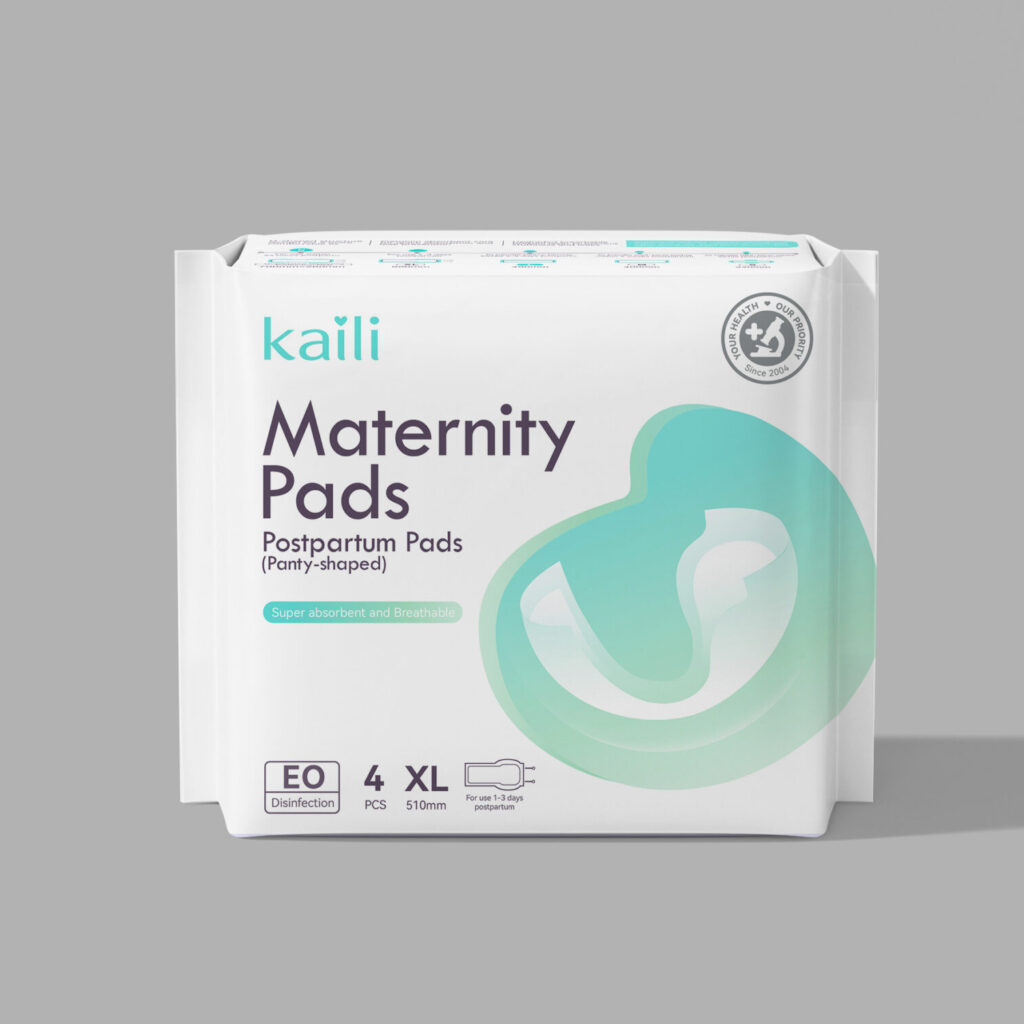
Maternity Pads vs. Regular Pads: The Key Differences
If you have ever held a maternity pad and a regular sanitary pad side by side, the difference is immediate. A maternity pad is noticeably longer, thicker, and softer — and there is a medical reason for every one of those design choices. After childbirth, the body sheds lochia, a discharge of blood, mucus, and tissue that can last anywhere from two to six weeks. Regular period pads are simply not built for that volume, that duration, or that level of sensitivity.
In this guide, we break down exactly how maternity pads vs. regular pads differ in size, absorbency, and material, and why postpartum care genuinely needs more. Whether you are a new mother packing a hospital bag or a buyer sourcing postpartum pads for a retail or healthcare channel, understanding the distinction is the first step to making the right call.
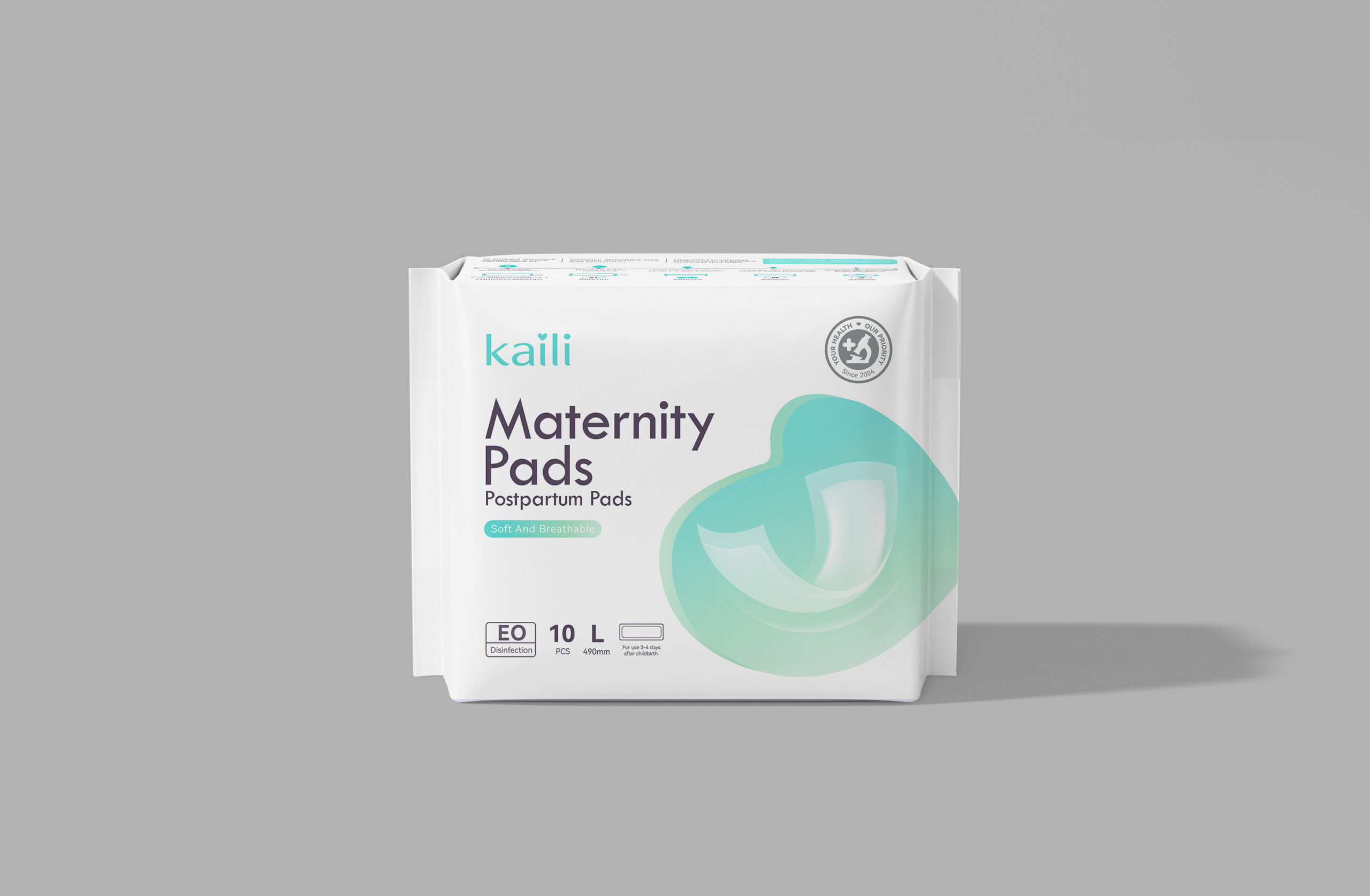
What Is Lochia and Why Does It Matter?
Lochia is the normal vaginal discharge that follows delivery — whether vaginal or C-section. It progresses through three stages, each with different volume and consistency:
| Lochia Stage | Typical Timing | Flow | Appearance |
|---|---|---|---|
| Lochia rubra | Days 1–4 | Heavy | Bright red, may contain small clots |
| Lochia serosa | Days 4–14 | Moderate | Pink or brownish, thinner |
| Lochia alba | Weeks 2–6 | Light | Yellowish-white |
The first 24 to 48 hours bring the heaviest flow, often heavier than the heaviest menstrual period. This is exactly when a standard sanitary pad fails: it saturates quickly, feels damp against the skin, and forces frequent changes that disturb a healing mother’s rest. A properly designed maternity pad addresses this with a much larger surface area and a thicker, fluff-pulp-and-SAP core.
The clinical framing is important here. Medical sources consistently describe lochia as a normal but substantial postpartum process rather than an ordinary period. The American College of Obstetricians and Gynecologists describes the postpartum weeks as a distinct recovery phase with its own hygiene needs — which is precisely why dedicated postpartum protection exists as a separate product category. A regular sanitary pad was never designed for this specific stage of recovery, and the design differences are not accidental.
Maternity Pads vs. Regular Pads: A Side-by-Side Comparison
The table below summarizes the core differences between the two products across the factors that matter most postpartum.
| Feature | Maternity Pad | Regular Sanitary Pad |
|---|---|---|
| Length | 280–420 mm (XL can exceed 420 mm) | 150–240 mm typical |
| Absorbent core | Thick fluff pulp + SAP | Thin fluff pulp, some SAP |
| Surface material | Extra-soft non-woven top sheet | Standard non-woven or mesh |
| Wing design | Often adhesive without wings, wider | Usually winged |
| Shape | Straight, elongated | Curved, contoured |
| Sterility | Often EO-sterilized (postpartum) | Not sterilized |
| Primary use | Postpartum lochia, heavy flow | Menstrual flow |
Size and Coverage
The most obvious difference is size. Maternity pads are longer — commonly 280 mm, 320 mm, 360 mm, and 420 mm — so they can cover a wider area while a new mother is lying down. This matters because lochia tends to pool when the body is horizontal, especially during the first days in a hospital bed. A short pad will leak at the back, while a long pad catches the flow regardless of position.
Absorbency and Core
Regular pads are engineered for the volume of a menstrual period, which averages roughly 30–80 ml over several days. Lochia in the first two days can exceed this in a matter of hours. Maternity pads therefore use a thicker fluff pulp core reinforced with superabsorbent polymer (SAP), the same absorbent chemistry used in adult underpads and diapers. The result is faster liquid lock-away and a drier surface against sensitive, healing skin.
Surface Softness and Sensitivity
After delivery, the perineal area may be swollen, bruised, or stitched. A mesh-top regular pad can catch on sutures and irritate already tender tissue. Maternity pads use an extra-soft non-woven top sheet, and many are EO-sterilized to reduce the risk of infection during the open wound phase. This is a meaningful difference that goes beyond comfort — it is about hygiene and healing.
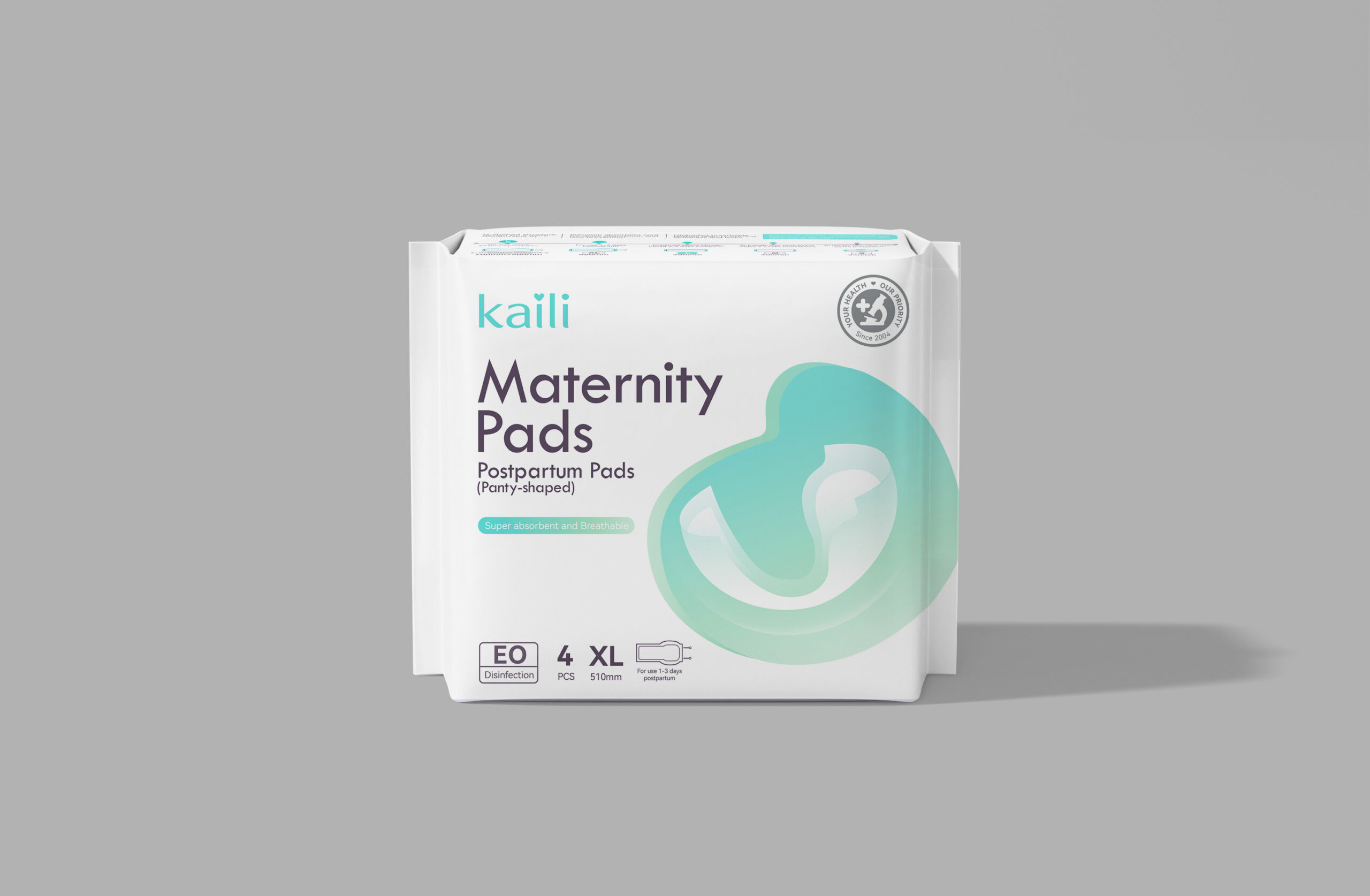
This sensitivity is why the choice between maternity pads and regular pads is not purely about absorbency. During the lochia rubra phase, the cervix is still dilated and the uterus is actively healing, which means the risk of infection is higher than at any other time. A sterilized, hypoallergenic pad is a genuine safety measure, not a luxury.
Why Postpartum Needs More Than a Regular Pad
The short answer is volume, duration, and sensitivity. Here is why each one drives the need for a dedicated maternity pad:
- Volume: The heaviest lochia flow outpaces even a “super” or “overnight” sanitary pad, leading to leaks, stains, and constant changes.
- Duration: Postpartum bleeding lasts weeks, not days, so a pad must stay comfortable for long-term, round-the-clock wear.
- Sensitivity: Healing tissue needs a softer, sterilized, non-irritating surface — a standard pad is not designed for wound-adjacent contact.
- Positioning: Lying down for extended periods means flow pools differently, requiring a longer, flatter pad.
For the same reasons, hospitals and maternity wards standardize on maternity pads and disposable underpads rather than consumer period products. If you are a buyer for a clinic, a maternity retail brand, or an online store, this clinical preference is a strong signal of where the demand sits.
Choosing the Right Maternity Pad: A Quick Checklist
When you compare options, keep these criteria front and center:
- Length matches flow stage — start with XL or maxi in the first week, scale down as lochia lightens.
- SAP in the core — confirms high absorbency and a dry surface.
- Soft, breathable top sheet — reduces friction on healing skin.
- EO sterilization — important for the early, infection-prone phase.
- No added fragrance or dyes — minimizes irritation risk.
- Individually wrapped — hygienic and convenient for hospital bags.
For a deeper walk-through of correct application, see our step-by-step maternity pad guide. And if you are still mapping out your full postpartum protection plan, our overview of lochia care and postpartum pads walks through the three stages in more detail.
Sourcing Maternity Pads for Retail and Healthcare
For businesses, the maternity pad category is a repeat-purchase, high-demand line with a clear buyer. New mothers need a steady supply for up to six weeks, and hospitals order in volume year-round. This makes it one of the most stable products in the maternal-care segment.
When sourcing, look for a manufacturer that can offer:
- OEM/ODM — custom sizing, packaging, and private-label branding.
- Certifications — ISO 9001, ISO 13485, and CE mark for medical-grade hygiene products.
- Flexible MOQ — reasonable minimums to test the market before committing.
- Free samples — to evaluate absorbency, softness, and fit before a bulk order.
We cover the exact questions to ask in our guide to vetting an underpad manufacturer in China, and the same principles apply to maternity pads.
Conclusion
The difference between maternity pads vs. regular pads is not marketing — it is engineering driven by real postpartum physiology. Maternity pads are longer, thicker, softer, and often sterilized because lochia demands far more than a menstrual period in volume, duration, and skin sensitivity. For a new mother, the right pad means fewer leaks, better hygiene, and more rest during recovery. For a buyer, it means a dependable, repeat-purchase product with clear clinical demand.
Ready to stock or private-label maternity pads? Explore our in-stock Maternity Pad XL wholesale offer or request a free sample and quote — we respond within 24 hours.

